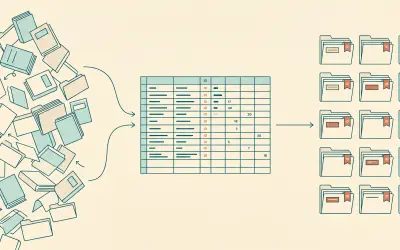
One file a day: how I finally saw what was happening with my work

I used to reach Friday with no memory of what I'd done all week. I grinded every day, but when someone asked what exactly I'd gotten done — I couldn't explain.
I started looking for a system to keep a daily log. Tried Trello — kept it for a week or two and dropped it, too complex. I already run a task manager for work, and now I need a second one. Then Notion and other tools — it all fell off, I couldn't keep it up for long because of the complexity.
Here's the thing. I needed a simple system for a simple goal. A plain daily log, that's it. In the end I landed on keeping a plain txt file — and I've done it for five years now.
How it works
The idea is simple. In the morning you jot down a plan, in the evening you check whether you did it all. That's it.
Warning
📅 Daily log: 2026-06-11
🎯 Plan for today:
1. SCT (main task): fix bugs and deploy itedu.online
2. Secondary: finish the chapter on the GMP scheduler
3. Call with a colleague
4. System design for the integration
5. Call with students
The first line is the main one. It's the SCT, the single critical task. One task per day that I close no matter what. The rest — as it goes.
Why this way. If there are ten tasks and you did five, by evening it feels like you did nothing — the other five are still hanging. But when there's one main task and it's closed, the day is already fine. Finished the rest — good, didn't — fine. Your head doesn't carry the whole list.
In the evening I go through the plan and write how it actually went:
Warning
📅 Daily log: 2026-06-11
🎯 End of day:
1. SCT — done
2. Secondary — done
3. Call — cancelled
4. System design — postponed (conditions changed)
5. Call with students — cancelled
6. Got stuck in Telegram for about two hours
The evening block is the most important part.
What it gives you
In the evening you write not how it should have been, but how it was. Got stuck on your phone for two hours — that's what you write. A single entry gives you nothing. But over a week, these entries show you the picture.
An example from my own. There was a couple of weeks when I'd open the logs on Friday and see the same thing: a call, fixing someone else's task, another call, a student, another call. My own technical task — zero over five days. That's no longer a feeling of falling behind, it's facts by day. I went to the team and carved out my mornings for deep work. Without the logs I wouldn't even have noticed — I'd just have thought I was working a lot.
One day is nothing. Five days — and a pattern shows up. Which tasks you push back three times (means they're badly framed or you're avoiding them), which days you sag on. Over a month you see it on a larger scale: which weeks are productive, where you took on too much.
In the daily log you just keep a list of tasks for the day. In the task tracker you write it out in detail: what you did on a task, what problems came up, what the nuances were. Need documentation — you write a doc and save it, say, in Confluence. And so on: for every specific task its own tool, but for a daily log a plain txt file is enough.
And it doesn't work if you write it in the evening just to tick a box. The whole point is honesty. Sugarcoat it — and you miss a chance to get better at productivity, or at something else.
Bottom line. One file a day, a morning plan with one main task, an honest recap in the evening. In a week you'll see your patterns, in a month — your rhythm. Ask me now what I did two weeks ago — I don't try to remember, I open the folder and look. Don't put it off until Monday. Start the file today, sketch a plan for the rest of the day, and in the evening mark what you got done.