How to get through a long YouTube course in one evening

Of the 10 students who come to me to learn, 9 have already tried before — and quit. And it's not about laziness. They'd open an 8-hour course, watch two lessons, and fall asleep on the third. The next day they'd start over — to refresh. A week later they're still on lesson three.
I learned that way myself. So the first thing I give a student isn't a course — it's a way to not watch courses.
Why video doesn't land
Long technical videos have too much filler, and you have to hunt for the part you need blindly along the timeline.
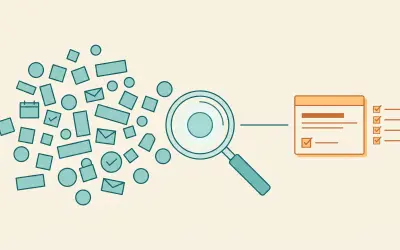
But from any video like Python in an hour you can quickly squeeze out a dry summary. It immediately shows what exactly you should focus on. So even if you do decide to watch the video, you'll get the most out of it. You can do the same with technical books. Hand the AI the chapters to scan and pull out a summary for you.
The method: transcript + ChatGPT
Here's what a student does on day one instead of watching.
- Open the video on YouTube.
- Three dots under the video, Open transcript, copy the whole text.
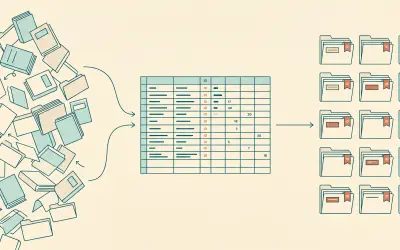
- Create a folder with the course name, and inside it a file for each lesson. If you don't set up the structure right away, it'll never exist.
- Drop the transcript into ChatGPT with the prompt below.
- Save it to the summaries folder. Repeat for each lesson.
Warning
Here's the transcript of a lesson on [topic].
Make a structured summary:
- key commands / syntax
- an explanation of each concept in simple words
- a cheat sheet at the end
Format — Markdown.
An hour of video folds into a summary you read in five minutes and later open in five seconds — instead of scrubbing through an hour-long video blindly. And while you clean the filler out of the GPT summary and rewrite it in your own words, you're already working with the material, not staring at a screen. That's where it sinks in.
Where this doesn't work
The method is only for theory: language syntax, Linux commands, Git concepts. It's the basics — you can compress them, because there you just need to understand and remember.
With hands-on courses — build a website from scratch, make a REST API — it won't work, watch from start to finish. There the process itself is what matters: why the author chose that decision at that moment, where he got stuck and how he got out of it. A transcript doesn't convey that.
But a summary isn't knowledge yet. It's a file. I've seen dozens of beautiful summaries a student put together and never opened again.
So the rule is simple: made a summary — that same day, write 5–10 lines of code on the topic. The next day, close the file and reproduce the key commands from memory. Can't — means you didn't learn it, open it again. I run this every cohort: those who do this step are writing code on their own within two weeks. Those who skip it end up with the same stack of unread files as before, only now in Markdown.
So the trick isn't in the transcripts themselves. Just stop watching and start doing from day one — and two weeks instead of a month happen on their own.